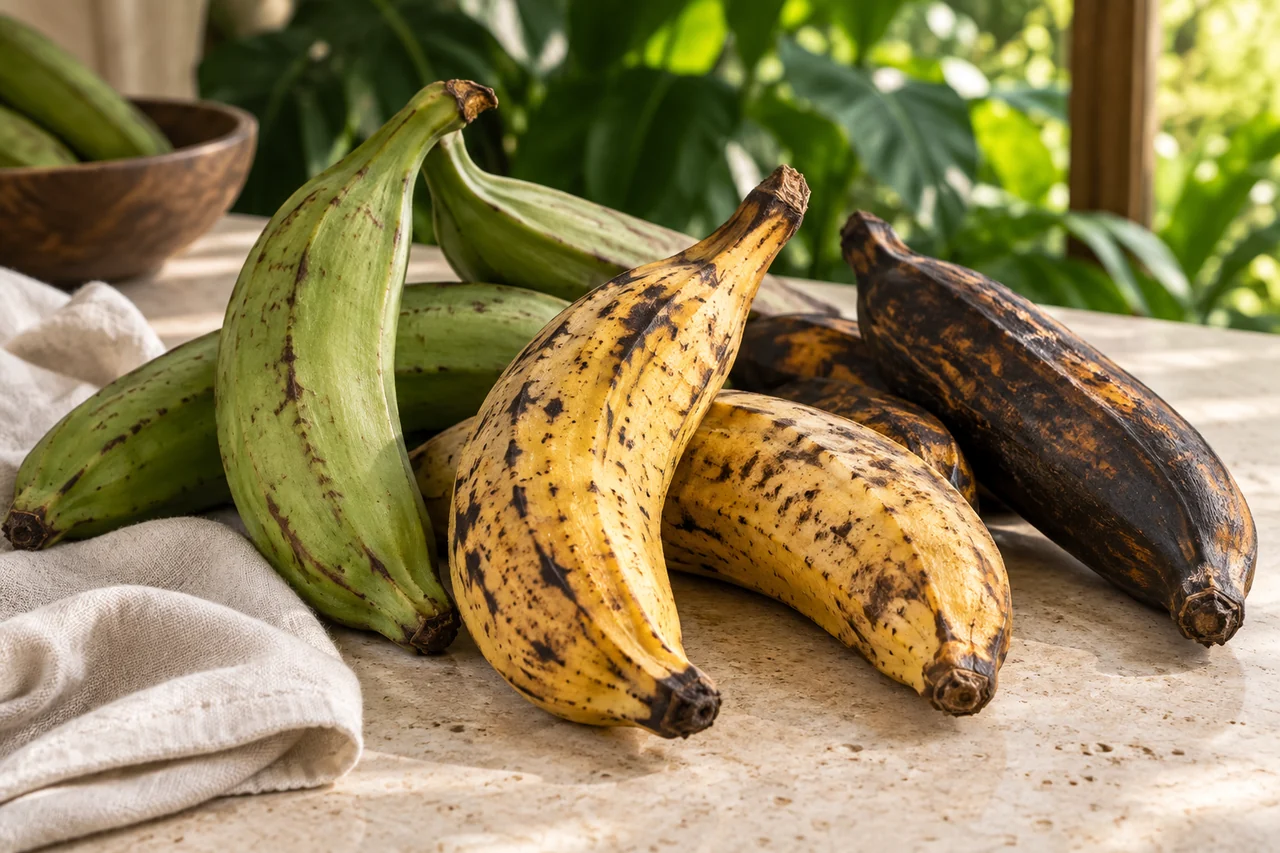
Green: firm and savory
A green plantain is firm, difficult to peel like a banana, and suited to preparations where starch and structure matter. Use it for tostones, mofongo, chips, and savory soup.
For tostones, the first fry softens the center; the second makes the flattened surface crisp. Substituting very ripe fruit changes the result dramatically.
Yellow: a transition, not a precise category
A mostly yellow plantain can still be relatively firm. Judge the texture as well as the skin. If a recipe calls for very ripe plantains, a yellow fruit with few spots may need more time before it gives the sweetness and softness you want.
Buying fruit at different stages can help you plan several meals without trying to use everything on the same day.
Deeply spotted: soft and sweet
Choose heavily spotted yellow or nearly black plantains for maduros, pastelón, and sweet baked dishes. The fruit should give gently when pressed.
Black skin can accompany normal ripening. Inspect the inside too: discard moldy, leaking, or unpleasant-smelling fruit rather than relying on color alone.
Can I swap green and ripe?
Usually not without changing the dish. Green plantains will not produce the same soft sweetness as ripe ones, and ripe plantains will not hold the firm cup shape needed for stuffed tostones.
Match the recipe to what you have: filter the recipe collection by green or ripe plantains.
Published by PlátanoCity · Our editorial approach