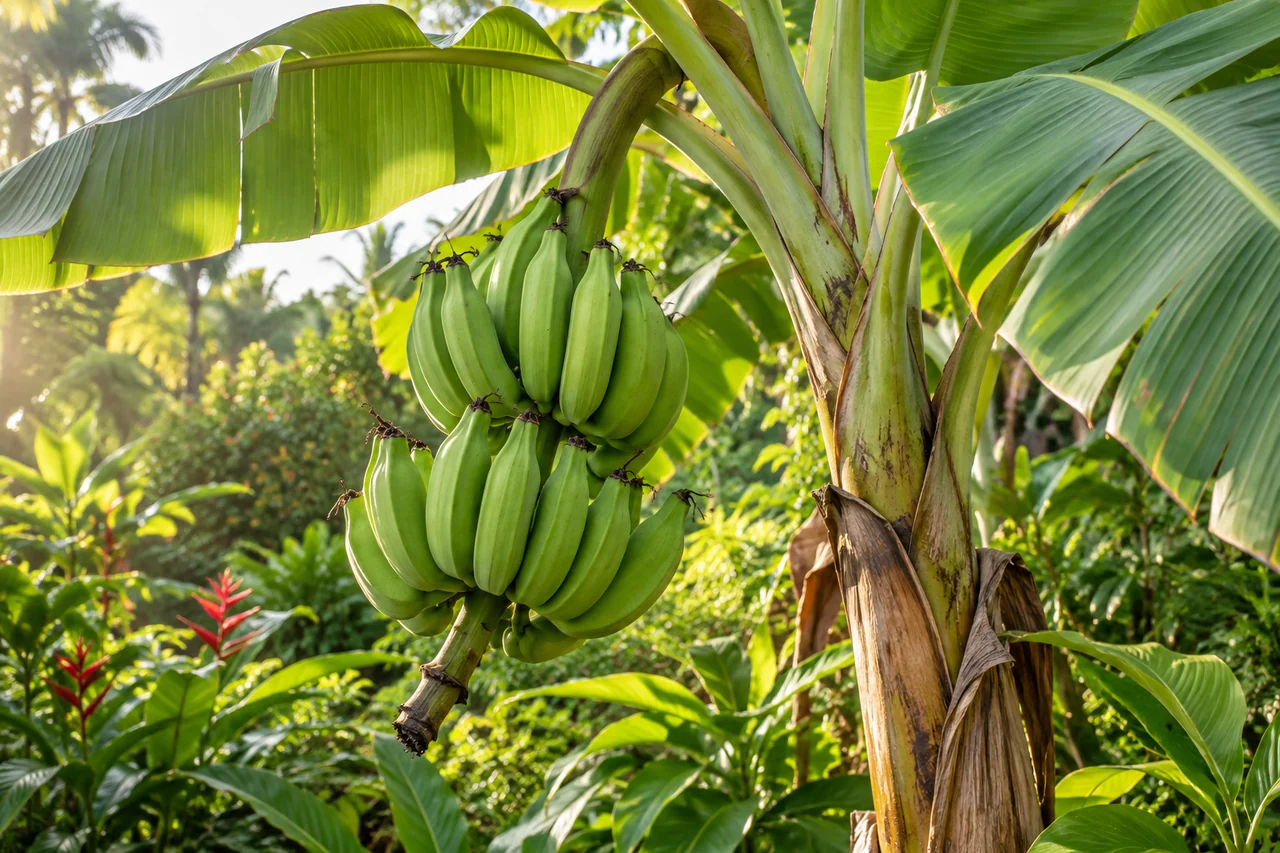
Complete Guide Home Gardening Tropical Plants

Growing Plantains - Complete Guide

Learn how to successfully grow plantains at home with our comprehensive guide. From climate requirements and planting techniques to care tips and harvesting methods, discover everything you need to cultivate your own plantain plants.

Climate & Growing Conditions

Understanding the ideal environmental conditions for successful plantain cultivation.

Temperature Requirements

Plantains thrive in warm tropical climates with temperatures between 75-95°F (24-35°C). They cannot tolerate frost and require consistent warmth year-round. In cooler climates, consider growing in containers that can be moved indoors during winter.

Sunlight Needs

Plantains require full sun exposure for optimal growth - at least 6-8 hours of direct sunlight daily. While they can tolerate partial shade, reduced sunlight will result in slower growth and smaller fruit production.

Soil Requirements

Plantains prefer well-draining, fertile soil rich in organic matter. The ideal soil pH is between 5.5 and 7.0. They grow best in loamy soil that retains moisture but doesn't become waterlogged.

Water Requirements

Plantains need consistent moisture, especially during dry periods. Water deeply 2-3 times per week, ensuring the soil remains moist but not saturated. Mulching helps retain soil moisture and suppress weeds.

Humidity & Rainfall

Plantains prefer high humidity environments and thrive in areas with 60-80 inches of annual rainfall. In drier climates, regular irrigation is essential for healthy growth and fruit development.

Wind Protection

Plantain plants have large leaves that can be damaged by strong winds. Plant in sheltered locations or provide windbreaks to protect the plants and prevent leaf tearing.

Planting Guide & Techniques

Step-by-step instructions for planting and establishing plantain plants.

Propagation Methods

Suckers (Recommended): Use healthy suckers from established plants. Select suckers with well-developed roots and at least 3-4 leaves. This method provides the fastest and most reliable results.

Rhizomes: Plant sections of rhizomes with at least one bud. This method takes longer but can produce multiple plants from a single rhizome.

Tissue Culture: For commercial production, tissue-cultured plants offer disease-free, uniform growth but require specialized equipment.

Planting Process

Site Preparation: Clear the area of weeds and debris. Dig holes 2 feet wide and 2 feet deep. Mix compost or well-rotted manure into the soil.

Spacing: Space plants 8-10 feet apart in rows 10-12 feet apart. This allows adequate room for growth and air circulation.

Planting Depth: Plant suckers at the same depth they were growing previously. Firm the soil around the base and water thoroughly.

Initial Care: Water daily for the first 2-3 weeks, then reduce to regular watering schedule.

Container Growing

Container Size: Use large containers (at least 25-30 gallons) with good drainage. Plantains have extensive root systems and need ample space.

Soil Mix: Use a well-draining potting mix with added compost. Consider adding perlite or vermiculite for improved drainage.

Location: Place containers in full sun locations. Move indoors or to protected areas during cold weather in temperate climates.

Fertilization: Container-grown plantains need more frequent fertilization due to limited soil volume.

Seasonal Planting

Best Planting Time: Plant during the rainy season or when consistent warm weather is expected. This helps establish strong root systems.

Tropical Regions: Can be planted year-round, but avoid the hottest, driest periods.

Temperate Regions: Plant after the last frost date when soil temperatures reach at least 60°F (15°C).

Greenhouse Growing: In cooler climates, consider greenhouse cultivation to maintain optimal growing conditions year-round.

Care & Maintenance

Essential care practices for healthy plantain growth and maximum fruit production.

Watering Schedule

Establishment Phase: Water daily for the first 2-3 weeks to help roots establish.

Mature Plants: Water deeply 2-3 times per week, providing 1-2 inches of water each time.

Dry Seasons: Increase watering frequency during hot, dry periods to prevent stress.

Flowering & Fruiting: Maintain consistent moisture during flowering and fruit development stages.

Signs of Overwatering: Yellowing leaves, root rot, fungal diseases.

Signs of Underwatering: Wilting leaves, slow growth, small fruit.

Fertilization Program

Young Plants: Apply balanced fertilizer (10-10-10) every 4-6 weeks during the first year.

Mature Plants: Use high-potassium fertilizer to support fruit development. Apply every 2-3 months.

Organic Options: Compost, well-rotted manure, or organic fertilizers work well.

Application Method: Spread fertilizer in a circle around the plant, avoiding direct contact with the stem.

Micronutrients: Ensure adequate magnesium and boron for healthy growth.

Pruning & Maintenance

Sucker Management: Remove excess suckers, keeping 2-3 strong ones per plant for continuous production.

Leaf Removal: Remove dead or damaged leaves regularly to improve air circulation.

Flower Management: Remove male flowers after fruit set to direct energy to fruit development.

Support Systems: Provide support for heavy fruit bunches to prevent stem breakage.

Weed Control: Keep the area around plants weed-free to reduce competition for nutrients.

Pest & Disease Management

Common Pests: Watch for banana weevils, nematodes, aphids, and mealybugs.

Disease Prevention: Practice good sanitation and avoid overhead watering to prevent fungal diseases.

Organic Controls: Use neem oil, insecticidal soap, or beneficial insects for pest management.

Signs of Problems: Yellowing leaves, stunted growth, fruit damage, or visible pests.

Preventive Measures: Rotate crops, use disease-resistant varieties, and maintain plant health.

Harvesting & Storage

When and how to harvest plantains for optimal quality and storage.

Harvest Timing: Plantains typically take 9-12 months to produce fruit. Harvest when the fruit is fully developed but still green for cooking plantains, or wait for yellowing for sweet plantains.

Ripeness Indicators: Look for plump, well-filled fruits. The ridges on the fruit should become less prominent as it matures.

Harvesting Technique: Cut the entire bunch with a sharp knife, leaving about 12 inches of stem attached. Handle carefully to avoid bruising.

Post-Harvest Care: Hang bunches in a cool, shaded area to ripen gradually. Avoid direct sunlight which can cause uneven ripening.

Storage Conditions: Store green plantains at room temperature. Once ripe, they can be refrigerated for a few days to slow further ripening.

Freezing Plantains: Peel and slice ripe plantains, then freeze on baking sheets before transferring to freezer bags for long-term storage.

Yield Expectations: A healthy plantain plant can produce 25-50 pounds of fruit per year under optimal conditions.

Continuous Production: After harvesting the main stem, allow one strong sucker to develop for the next production cycle.

Troubleshooting Common Issues

Solutions for common plantain growing problems.

Why are my plantains not fruiting?

Possible Causes:

  • Insufficient sunlight
  • Nutrient deficiencies
  • Inadequate water
  • Plants too young
  • Temperature stress

Solutions:

  • Ensure full sun exposure
  • Apply balanced fertilizer regularly
  • Maintain consistent watering
  • Be patient - plants need 9-12 months to mature
  • Protect from temperature extremes

Why are the leaves turning yellow?

Possible Causes:

  • Overwatering or poor drainage
  • Nutrient deficiencies (especially nitrogen)
  • Pest infestation
  • Natural leaf aging
  • Disease issues

Solutions:

  • Improve soil drainage
  • Apply appropriate fertilizer
  • Check for pests and treat if necessary
  • Remove old leaves regularly
  • Practice good sanitation

Why is growth stunted?

Possible Causes:

  • Poor soil quality
  • Insufficient nutrients
  • Root-bound in containers
  • Competition from weeds
  • Pest or disease pressure

Solutions:

  • Improve soil with compost and organic matter
  • Apply appropriate fertilizer regularly
  • Repot container plants into larger containers
  • Keep planting area weed-free
  • Address pest and disease issues promptly

Why are fruits small or deformed?

Possible Causes:

  • Inadequate pollination
  • Nutrient deficiencies (especially potassium)
  • Water stress during fruit development
  • Pest damage
  • Genetic factors

Solutions:

  • Ensure adequate pollination by maintaining healthy plants
  • Apply potassium-rich fertilizer during fruiting
  • Maintain consistent watering during fruit development
  • Protect plants from pests
  • Consider planting different varieties