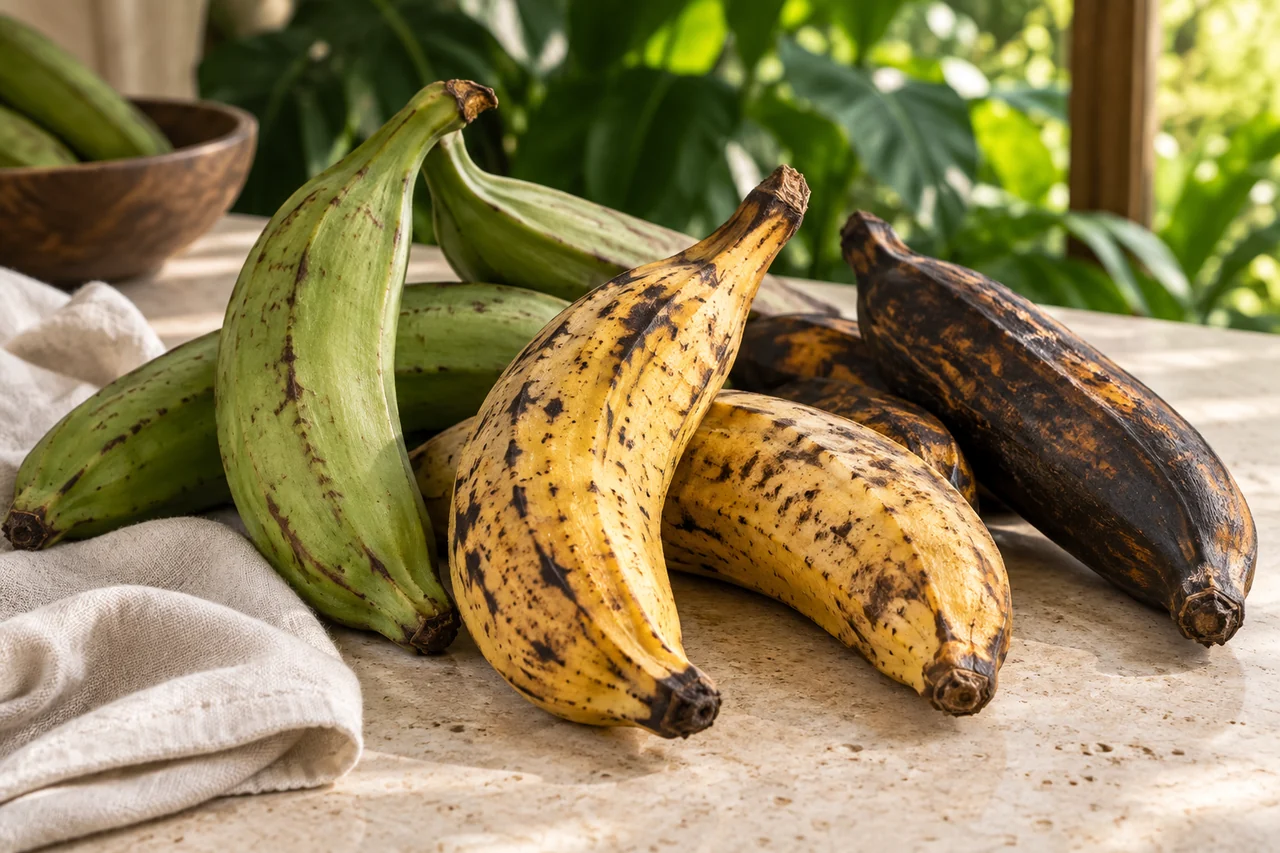
Great source of steady, complex carbs
Plantains are rich in complex carbohydrates and relatively low in fat and protein, making them a filling energy source that digests more slowly than refined carbs.
Complete guide to plantain nutrition facts, calories, vitamins, minerals, and health benefits. Learn how plantains fit into a healthy diet for weight management, diabetes, heart health, and more.
Detailed nutritional information for plantains at different stages of ripeness.
Plantain nutrition varies significantly based on ripeness and cooking method. Here's how they compare:
| Nutrient | Green Plantain (100g raw) | Ripe Plantain (100g raw) | Fried Plantain (100g) |
|---|---|---|---|
| Calories | 122 | 122 | 240 |
| Carbohydrates | 32g | 32g | 48g |
| Fiber | 2.3g | 2.3g | 3.5g |
| Sugar | 15g | 22g | 25g |
| Protein | 1.3g | 1.3g | 1.5g |
| Fat | 0.4g | 0.4g | 12g |
| Potassium | 499mg | 499mg | 450mg |
| Vitamin C | 18mg | 18mg | 15mg |
| Vitamin A | 1127 IU | 1127 IU | 1000 IU |
*Percent Daily Values are based on a 2,000 calorie diet.
Discover how plantains can support your health and wellness goals.
Plantains are rich in complex carbohydrates and relatively low in fat and protein, making them a filling energy source that digests more slowly than refined carbs.
They contain both insoluble fiber and resistant starch, especially when green. Fiber and resistant starch help improve bowel regularity, feed beneficial gut bacteria with a prebiotic effect, and increase satiety, which can support weight management.
Plantains are rich in potassium and also provide magnesium. Potassium helps balance sodium, relax blood vessel walls, and support normal blood pressure and heart function.
Green or just-ripe plantains are higher in resistant starch and lower in simple sugar than very ripe ones. Boiled, baked, or roasted plantains, rather than fried, cause a slower rise in blood glucose than many refined starches, which can help with blood sugar management when portion sizes are reasonable.
Fiber adds bulk to stool and can help prevent constipation. Resistant starch acts like a prebiotic, feeding gut bacteria that produce short-chain fatty acids such as butyrate, which are linked to colon health.
Plantains provide vitamin C, an antioxidant that supports immune cells, helps your body absorb iron from plant foods, and supports tissue repair.
They contain vitamin A and related carotenoids, which support normal vision, especially night vision, as well as immune function and healthy skin and mucous membranes.
Because they are rich in complex carbs, potassium, and magnesium, plantains can help replenish glycogen after exercise, support muscle contraction and nerve function, and reduce the risk of muscle cramps linked to low potassium or magnesium.
Plantains supply vitamin B6, which your body uses to make neurotransmitters such as serotonin and dopamine, both important for mood regulation and brain function.
They are a naturally gluten-free starch, useful for people with celiac disease or gluten sensitivity as an alternative to wheat-based sides and snacks.
Plantains are often inexpensive yet provide substantial calories, fiber, potassium, vitamin C, vitamin A, and some magnesium and B-vitamins per serving, making them a cost-effective way to improve overall diet quality.
How plantains fit into various dietary approaches and health conditions.
Plantains can fit into a weight-loss plan if you control portions and choose healthier cooking methods like boiling, baking, or air-frying instead of deep-frying. They are energy-dense, so pairing them with lean protein and plenty of vegetables is key.
Many people with diabetes can include plantains in moderation, especially when portion size is controlled and they are boiled, baked, or air-fried instead of deep-fried. Green plantains have a lower glycemic impact than ripe ones. Always follow personal medical advice from your healthcare provider.
Plantains are a good source of potassium and low in sodium, which can support healthy blood pressure as part of an overall balanced diet. How they affect heart health depends a lot on preparation—baked or boiled is better than deep-fried.
The fiber and resistant starch in plantains can support regular bowel movements and feed beneficial gut bacteria, especially when they're less processed and not fried. Be sure to drink enough water and include a variety of fiber sources in your diet.
The way you cook plantains significantly impacts their nutritional value.
Boiling: Preserves most nutrients, adds no extra fat, and maintains the natural fiber content. Boiled plantains have the lowest calorie count and are excellent for digestive health.
Baking: Retains nutrients well while developing natural sweetness through caramelization. Uses minimal added fat and creates a healthier alternative to frying.
Air-Frying: Provides crispy texture with significantly less oil than traditional frying. Reduces calorie and fat content while maintaining good flavor and texture.
Grilling: Adds smoky flavor without extra fat. The high heat caramelizes natural sugars while preserving nutrients.
Deep-Frying: Significantly increases calorie and fat content. While delicious, fried plantains should be enjoyed in moderation as part of a balanced diet.
Steaming: Preserves water-soluble vitamins like vitamin C and B vitamins better than boiling. Maintains natural moisture and texture.
Key Takeaway: For maximum health benefits, choose boiling, baking, air-frying, or grilling over deep-frying. These methods preserve nutrients while minimizing added fats and calories.
Common questions about plantain nutrition and health benefits.
Yes, plantains are a nutritious source of complex carbohydrates, fiber, potassium, vitamin C, and vitamin A, especially when prepared with little added fat or sugar. They should be part of a balanced meal with protein and vegetables rather than the only component.
A typical cooked serving of plantain provides mostly carbohydrates, plus fiber, potassium, vitamin C, vitamin B6, magnesium, and vitamin A, with very little fat or protein.
A medium raw plantain (about 179 g) has roughly 215–230 calories, mostly from carbohydrates. Cooking methods like frying can significantly increase the calorie content.
Yes, plantains are a high-carbohydrate food; 100 g of raw plantain has about 30–32 g of carbs, mainly from starch. That's why they're filling and used as a staple like rice or potatoes.
Plantains can fit into a weight-loss plan if you control portions and choose healthier cooking methods like boiling, baking, or air-frying instead of deep-frying. They are energy-dense, so pairing them with lean protein and plenty of vegetables is key.
Many people with diabetes can include plantains in moderation, especially when portion size is controlled and they are boiled, baked, or air-fried instead of deep-fried. Green plantains have a lower glycemic impact than ripe ones. Always follow personal medical advice from your healthcare provider.
Green plantains are higher in resistant starch and may be better for blood sugar control and gut health, while ripe plantains are sweeter and may be easier to digest. Both can be part of a healthy diet when portion sizes and cooking methods are balanced.
Yes, whole fresh plantains are naturally gluten-free because they're a fruit, not a grain. The only concern is when they're battered, breaded, or processed with gluten-containing ingredients.