Think about the recipe, not just the shape
Plantains are a type of cooking banana. Compared with familiar sweet dessert bananas, they are generally larger, firmer, and used in cooked preparations. Their thick peel can be difficult to remove while green.
These are useful kitchen distinctions, not a claim that every variety behaves identically. Names also vary across countries and languages.
What changes when you cook them?
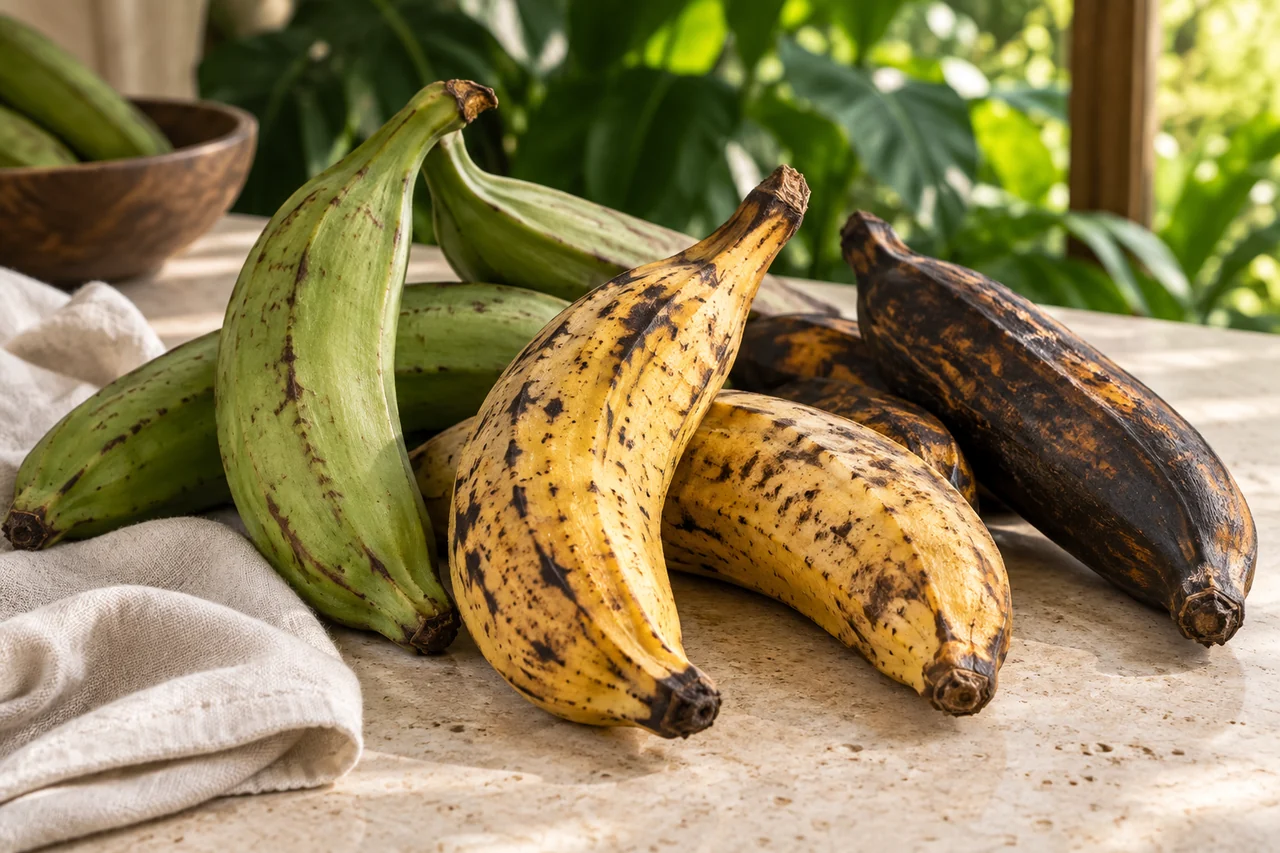
Green plantains can become crisp tostones, a savory mash, or pieces in soup. Ripe plantains soften and caramelize into sweet sides and desserts. A soft dessert banana will not give the same structure in a recipe that starts with firm green plantain.
For a useful side-by-side introduction, try tostones and maduros with the correct stage of plantain for each.
A shopping checklist
- Read the shelf label, then check size, firmness, and peel.
- Choose green plantains for savory frying or mashing.
- Choose heavily spotted ripe plantains for sweet pan-frying.
- If uncertain, ask the grocer for cooking plantains and name the dish.
Compare matching portions
Do not compare one large plantain with one small banana and treat the difference as a nutrient-density comparison. Use equal edible weights and matching preparation methods. Our nutrition guide explains that approach.
For botanical background, see UF/IFAS on bananas and plantains.
Published by PlátanoCity · Our editorial approach